
Singapore’s Tuas Mega Port is a strategic reshaping of the country’s industrial geography, logistics networks, and real estate economics. Launched over 10 years ago, Tuas Port consolidates container operations into a single, highly automated complex on the country’s far-western coast.
The port’s phased roll-out, with significant operational indicators in the 2020s and full build-out set to take place across the 2040s, has already shifted demand patterns for warehouses, distribution hubs, light industrial facilities, and the broader ecosystem that supports Singapore’s trade.
The implications for developers, investors, and occupiers are profound: land use priorities move westward; companies invest on the logistics side, upgrade their logistics footprints; and new business models are formed linking coastal capacity and inland productivity.
What Tuas Port Will Offer.
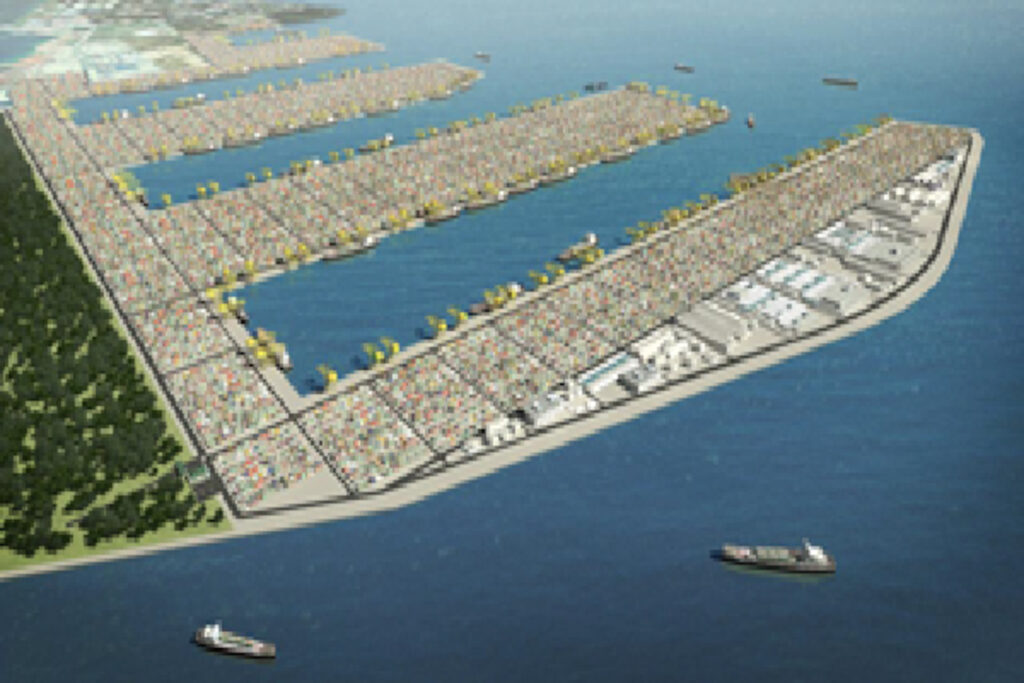
Tuas Mega Port is a multi-stage development planned to become one of the largest fully automated container terminals globally when completed. Phase 1, which is already operational, comes with deep-water berths that accommodate the world’s biggest container ships.
The plan combines decades-old city terminals into Tuas, eliminating inter-terminal trucking and centralising flows of containers into a single high-efficiency node. At the forefront of this is automation, with cranes operating automatically, intelligent transport vehicles, and big data-driven coordination increasing efficiency and throughput.
These features matter because they play a direct role in how quickly goods flow inland and the nature of industrial facilities businesses need to keep up with faster shipping cycles.
The Demand Geography: Why the West Is Gaining — and Rapid.
The more prominent move in real estate is geographic. As demand is generated, it will naturally take place downstream in ports, where logistics firms can cut down on inland travel time, reduce drayage charges and speed up inventory turnover.
As operations at Tuas are consolidated, a Western region—made up of Tuas, Jurong with industrial estates and so on—is now Singapore’s principal logistics and distribution strip. Leasing momentum has been strongest in the West with companies re-arranging distribution systems to get the best both of speedier haul and increasing port capacity.
More and older industrial estates closer to the city are coming to maturity, businesses and corporations are finding the West to be the better location for long-term operations, warehousing, and freight-forwarding. Improvement of the Industrial Stock, from Basic B2 to High Quality Logistics. The type of industrial stock needed is changing, as the port is modernising.
Conventional B2 factory and warehouse formats are no longer enough today’s supply chain needs. Occupiers today are only willing to pay for higher-spec logistics facilities that automate more, lift floors, have higher ceilings and loading bays, are with better facilities that load bays, and are now even more optimised. Multi-storey warehouses — a Singapore invention — are now being engineered with the bells and whistles of sophisticated lifts on board, automated racking engines, cold-chain storage, solar panels and smart energy management.
Developers have also invested in upgrading older inventory or replacing less-good assets they found in the past with modern logistics hubs for e-commerce, cross-docking or regional distribution. They will become the default, not an added bonus: integrated warehouses with robotics systems, warehouses and infrastructure to handle an EV-ready environment.
The change is also an opportunity to improve the investment position of these properties as future-proof assets still see the most interest. Investment Flows and the Institutional Appetite. The strategic value of Tuas Mega Port has led it to attract a lot of attention from institutional investors in place, real estate funds and logistics professionals.
Long-term economic fundamentals like trade across the Asia-Pacific, supply chain diversification and Singapore’s status as a global maritime hub also give investors an outlook that port-centric assets are structurally sound. International capital is increasing its stakes in warehouses and logistics ventures near Tuas and Jurong.
Western corridor acquisitions of logistics assets have been more profitable because they have higher liquidity and offer some of the same income stability as larger chains. Build-to-suit projects for major tenants — notably e-commerce companies, 3PLs, cold-chain operators and freight forwarders — have increased as well, driving the region’s real estate boom.
The momentum will be maintained as more phases of the port come online and trade flows grow. Rent, Vacancy and Leasing Dynamics. The West has had the strongest rent growth as demand for modern logistics facilities has outstripped supply. Properties that offer immediate access to the port, major expressways and modern-grade specifications continue to command high rents.
Vacancy rates are squeezing, particularly on newer properties, as logistics operators crowd into local Tuas to increase efficiencies. Legacy warehouses that lack modern features are pressured to re-align or upgrade. On the other hand, high-spec logistics spaces have been seeing steady demand as they combine automation and sustainability as well as flexibility in layout that are suitable for regional distribution as well as last-mile fulfilment.
The market will probably see growing divergence over time, between the value of modern stock — which stands at an advantage in terms of high rents — versus older assets that must have capital spending to stay abreast. Effects on Ancillary Services, Land Use, and Urban Planning. And the expansion of Tuas Mega Port is transforming the wider industrial environment. But a growing demand for container depots, truck repair workshops, maritime equipment yards and supply-chain service facilities also exists outside logistics warehouses.
As these needs exist, new developments are being developed in neighboring neighborhoods with zoning that promotes heavy vehicle traffic and port-related activities. Urban planning agencies in turn are reshaping land allocations, infrastructure investments and transport networks to allow for the port’s expansion. Road widening, junctions improvements and more freight-friendly traffic systems are now being introduced at the point of service to help address the concentrated heavy vehicle mass of the West.
With the traffic on the ports it removes cross-island trucking between terminals, thereby avoiding congestion in other regions and improving efficiency. Environmentally sensitive planning elements — for example emissions management, noise buffers, sustainability features — are also part of the mix. New projects are needed to support optimal energy solutions, with national ambition of sustainable industrial development. Features that are attractive to developers, operators and tenants.
Operators have more predictability in port schedules that enable them to use shipping windows more efficiently and to decrease dwell time. Tenants who adopt supply-chain models in tandem with Tuas Port gain competitive advantage that is concrete and genuine – ranging from cutting transport costs to getting closer to full inventory times.
Companies which utilize automation technology, cross-docking savings, regional distribution logistics function are able to take advantage of Tuas as a gateway to both import and export flows. The ecosystem also creates value-added services opportunities for operators of logistics companies combined with customs clearance agents and tech firms providing warehouse automation.
What the Current Milestones Tell Us.

Operational milestones at Tuas — including the commissioning of several deep-water berths and the increased annual throughput — prove that the port even under construction is already impacting Singapore’s industrial market. Every major achievement boosts investor confidence, lures additional logistics operators to the western corridor, and speeds up the re-development of older industrial stock to meet new needs.
The industrial market is still evolving from the 2030s to the 2040s with more phases going online. Long-term winners will be those who map strategy to the needs of future tenants, embed sustainability and automation in their infrastructure and prepare for the change in geography to Tuas.
Singapore Strategic Industrial Map Restructuring.
Tuas Mega Port is transforming Singapore’s industrial property context through changes in the movement of goods, the location of facilities and occupiers’ needs. The port builds the West’s role as the country’s logistics hub, drives demand for high-specification industrial developments, and draws persistent institutional investment.
The message is clear for developers, investors and businesses: align to the shift westwards, and with modern specifications to take full advantage of productivity benefits derived from the Port. Singapore’s industrial economy is reconnecting with one of the world’s next generation maritime gateway. As it expands in stages, Tuas’ impact on industrial real estate continues to grow and will lay the groundwork for a more robust and competitive logistics ecosystem for decades to come.