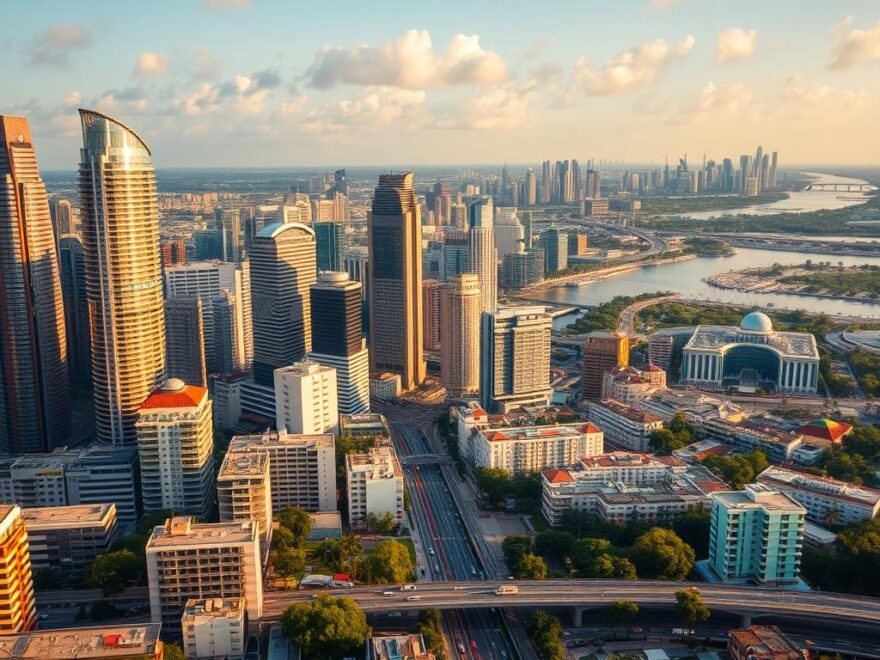
The Asia Pacific region is experiencing a resurgence in commercial real estate, driven by the start of an interest rate easing cycle in the US. The Emerging Trends in Real Estate 2025 Asia Pacific report by PwC and Urban Land Institute (ULI) notes this shift. It has sparked optimism in the market.
Singapore is ranked 4th among the top cities for investment prospects in the region, indicating a thriving property market. The report highlights the factors contributing to this growth. It provides valuable insights into the current market trends.
As the market continues to evolve, understanding the dynamics of the Singapore property market is crucial for investors and stakeholders. This article will explore the trends and prospects shaping the industry in 2025.
Overview of Singapore’s Real Estate Landscape
Singapore’s robust legal framework and high quality of life have cemented its status as a prime real estate investment destination. The city-state’s advanced infrastructure and stable economy draw both local and foreign investors. This makes it an ideal place to buy a house in Singapore.
Key Trends Shaping the Market
Several trends are currently influencing Singapore’s real estate market. The growing demand for sustainable and eco-friendly properties stands out. This is driven by increasing environmental awareness and government support for green building practices.
The rise of digitalization in real estate is another significant trend. More platforms are emerging to streamline property transactions and management. This digital shift is making the market more efficient and transparent.
Economic Factors Influencing Real Estate
Economic indicators are crucial in shaping Singapore property prices. The country’s GDP growth, interest rates, and inflation rates are key factors. A robust economy with steady GDP growth boosts investor confidence, driving up property market activity.
Government policies on taxation and cooling measures also play a significant role. For example, measures to curb speculation and ensure affordability can impact demand for investment properties in Singapore.
Government Policies and Their Impact
The Singapore government employs various policies to regulate the real estate market. These include cooling measures to prevent overheating and grants for first-time homebuyers. Such initiatives can greatly influence the appeal of investment properties in Singapore and the broader market.
Government policies promoting sustainable development and green infrastructure are also shaping the future of Singapore’s real estate. These policies encourage developers to adopt eco-friendly practices and invest in green buildings.
Types of Properties in Singapore
The Singapore property market showcases a wide array of options, ranging from residential to commercial and industrial properties. This variety meets the diverse needs of investors, homebuyers, and businesses. As a result, Singapore emerges as a premier location for real estate investment.
Residential Properties: HDBs and Condos
In Singapore, residential properties are mainly divided into HDB flats and private condominiums. HDB flats, developed by the Housing and Development Board, provide affordable housing to locals. In contrast, private condominiums attract both locals and foreigners, with many available for sale in prime locations. Engaging with seasoned Singapore real estate agents is crucial for condo buyers to navigate the intricate purchase process.
The demand for residential properties remains robust, fueled by population growth and the quest for superior living environments. The allure of Singapore’s real estate market extends to foreign investors, who appreciate the city-state’s stability and high-standard infrastructure.
Commercial Real Estate: Offices and Retail
Commercial real estate in Singapore encompasses office spaces and retail properties. The demand for office spaces is bolstered by the presence of multinational corporations and the expanding financial sector. Retail properties, from shopping malls to boutique stores, benefit from Singapore’s reputation as a tourist and shopping destination.
Investors in commercial real estate can leverage Singapore’s business-friendly environment and its pivotal role as an economic center in Asia. The role of Singapore real estate agents in facilitating transactions in this segment is indispensable.
Industrial Properties: Warehouses and Factories
Industrial properties, encompassing warehouses and factories, are vital for Singapore’s manufacturing and logistics sectors. The demand for industrial space is driven by the expansion of e-commerce and the necessity for efficient supply chain facilities.
Singapore’s strategic location and advanced infrastructure make it an ideal location for industrial activities. Investors in industrial properties can benefit from the country’s robust logistics and manufacturing capabilities.
The Role of Foreign Investment in Singapore Real Estate
Foreign investment significantly influences Singapore’s real estate, bolstered by its status as a global financial hub. The city-state’s robust rental market and reputation for safety and stability continue to draw overseas buyers.
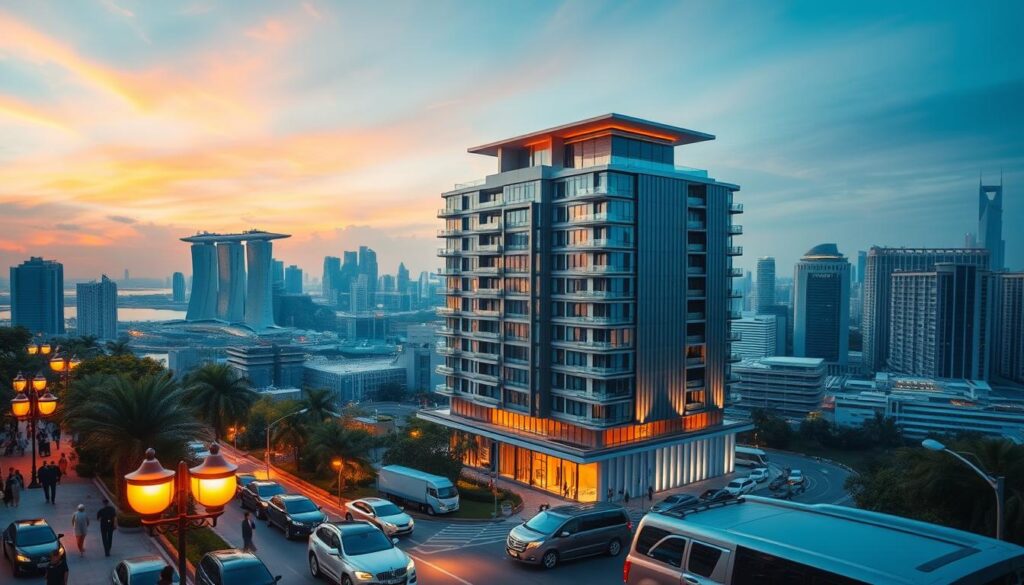
Attractiveness to Overseas Buyers
The allure of Singapore’s property market for foreign investors is undeniable. Its transparent and well-regulated environment stands out. The government’s commitment to a stable economy and a robust legal framework further solidifies its appeal.
Its status as a global financial hub and high rental yields make it a prime location for investment properties. The luxury segment, in particular, garners significant interest from overseas buyers seeking premium condominiums and apartments.
Recent Foreign Acquisitions
Recent years have witnessed a plethora of significant foreign acquisitions in Singapore’s real estate market. These transactions are driven by both individual investors and institutional funds aiming to leverage the city-state’s stable and expanding property market.
Notably, there has been a notable increase in investments in commercial and industrial properties. This reflects the growing demand for office spaces and logistics facilities. This trend is anticipated to persist as Singapore remains a pivotal hub for businesses in Southeast Asia.
Regulations for Foreign Investors
While Singapore welcomes foreign investment, certain regulations apply to foreign investors. These include the Additional Buyer’s Stamp Duty (ABSD) and Seller’s Stamp Duty (SSD) under specific conditions.
Foreign investors are encouraged to seek professional advice to navigate these regulations and ensure compliance. Despite these measures, Singapore remains a highly sought-after destination for foreign real estate investment, driven by its strong economic fundamentals and stable political environment.
Real Estate Technology and Innovation
The Singapore real estate market is undergoing a significant transformation with the integration of technology and innovation. This shift is enhancing the efficiency, accessibility, and overall experience of buying and selling properties in Singapore.
PropTech Transformations
PropTech, or Property Technology, is revolutionizing the way properties are bought, sold, and managed. In Singapore, PropTech companies are leveraging technologies like AI, blockchain, and big data to provide innovative solutions for the real estate market. This includes digital platforms for property transactions, virtual tours, and data analytics for market insights.
Smart Home Trends
The concept of smart homes is gaining traction in Singapore’s property market. Homebuyers are increasingly looking for properties equipped with smart features such as automated lighting, security systems, and energy management. These features not only enhance the living experience but also increase the value of the property.
Digital Platforms for Property Selling
Digital platforms are transforming the way properties are marketed and sold in Singapore. Online portals and mobile apps provide a convenient way for buyers to browse properties, access market data, and connect with real estate agents. These platforms are making the property buying process more transparent and efficient.
The integration of technology and innovation in Singapore’s real estate market is creating new opportunities for investors and enhancing the overall property buying experience. As the market continues to evolve, it is expected that technology will play an increasingly important role in shaping the future of the Singapore property market.
Current Challenges in the Market
The Singapore property market faces numerous challenges that hinder its growth. Despite economic uncertainty, the market’s fundamentals remain robust, with certain segments showing resilience.
Rising Property Prices and Affordability
The rapid increase in Singapore property prices has sparked concerns about affordability, mainly for first-time buyers. As prices soar, potential homeowners struggle to enter the market.
The government’s attempts to stabilize the market have yielded mixed outcomes. Some measures inadvertently push prices up in specific segments.
Supply Chain Disruptions
Supply chain disruptions pose a significant hurdle, impacting project timelines and costs. This affects both developers and buyers, as delays and higher costs threaten project viability.
Global factors, such as trade tensions and logistical hurdles, complicate the issue further.
Regulatory Changes and Their Implications
Regulatory shifts are reshaping Singapore’s real estate market. Recent adjustments to cooling measures and tax policies have profound effects on buyers and investors.
Grasping these changes is essential for effective market navigation and making well-informed decisions about property investments in Singapore.
Upcoming Developments and Projects
Singapore’s real estate sector is poised for a transformative period, with several significant infrastructure projects and residential developments in the pipeline. As the city-state expands, its real estate market is set to flourish with a plethora of new initiatives.
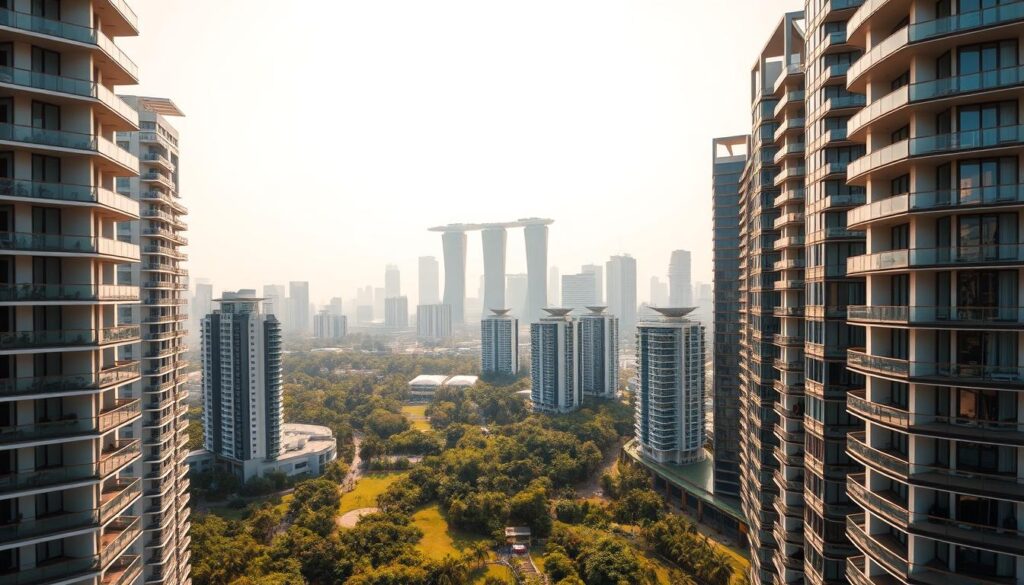
Major Infrastructure Initiatives
The growth of Singapore’s real estate market is significantly influenced by ongoing infrastructure developments. These initiatives, such as the expansion of the Mass Rapid Transit (MRT) system and the creation of new transportation hubs, aim to enhance connectivity. This, in turn, is expected to elevate property values across the board.
The upcoming Cross Island MRT line promises to revolutionize connectivity between Singapore’s eastern and western regions. This development will make previously remote areas more accessible, likely increasing demand for properties in these locales. This trend is expected to be a boon for investment property in Singapore.
New Residential Developments
Singapore is experiencing a surge in residential development, with several high-profile projects underway. These include luxury condominiums and integrated residential complexes, offering a plethora of amenities and services to residents.
For those seeking Singapore condos for sale, a diverse array of options awaits. From opulent apartments with premium finishes to more budget-friendly units in emerging neighborhoods, there is something for every buyer. This variety aims to meet a range of preferences and budgets.
Green Building Projects
Sustainability is a growing focus in Singapore’s real estate sector, with green building projects becoming increasingly prevalent. These initiatives incorporate eco-friendly design and technologies, aiming to minimize environmental impact while improving resident quality of life.
Developers are striving to create structures that surpass current green building standards. This trend is driven by both regulatory mandates and a rising consumer interest in sustainable living options.
Real Estate Financing Options in Singapore
The real estate sector in Singapore is booming, thanks to a variety of financing options that draw investors. As the market evolves, it’s vital for potential buyers and investors to grasp these financing options.
Mortgage Trends in 2025
In 2025, mortgage trends in Singapore are expected to shift towards more adaptable loan structures and competitive interest rates. Real estate agents in Singapore report a surge in inquiries about mortgage options. This is driven by the need for more affordable financing solutions.
Buyers are now examining various mortgage packages, such as fixed-rate and floating-rate loans, to align with their financial needs. This trend is anticipated to persist as the market remains in flux.
Government Grants and Schemes
The Singaporean government has introduced several grants and schemes to aid homebuyers, mainly first-time buyers. These initiatives aim to make homeownership more attainable and cost-effective.
According to Singapore property news, these government schemes are crucial. They include grants for HDB flats and other forms of support for eligible buyers. It’s imperative for those considering property purchase in Singapore to stay updated on these programs.
Alternative Financing Solutions
Aside from traditional mortgage financing, alternative solutions are gaining popularity in Singapore’s real estate market. These include private financing options and innovative financial products tailored for real estate investments.
Compared to neighboring countries like Malaysia, Singapore offers a more stable and secure environment for real estate investments. Alternative financing solutions in Singapore aim to meet the diverse needs of investors, offering more flexibility and growth opportunities.
Rental Market Dynamics
Singapore’s allure to global talent is driving a surge in rental demand, notably for luxury properties. This shift profoundly impacts the rental market’s dynamics in Singapore.
Average Rent Trends in 2025
In 2025, Singapore’s rental market presents a mixed scenario. Certain locales experience rent slowdowns due to increased supply. Yet, others witness rent hikes, fueled by demand for upscale and premium properties. The overall trend indicates a gradual rent increase, notably in prime areas.
The luxury segment stands out, with high-end condo and apartment rents in coveted districts experiencing substantial growth. This surge is largely due to the expanding expatriate population and their preference for premium living environments.
Demand for Rental Properties
Rental demand in Singapore is escalating, influenced by both local and international factors. The influx of expatriates significantly contributes, seeking superior accommodations that align with their lifestyle aspirations.
Local demand also remains strong, with many Singaporeans choosing to rent over buying due to high property costs. This preference has fueled a thriving rental market, offering a variety of properties to suit diverse budgets and tastes.
Expatriate Influence on the Rental Market
Expatriates are pivotal in shaping Singapore’s rental market. Their penchant for luxury and high-end amenities has spurred the development of such properties. This development, in turn, has expanded the rental market, making it more diverse and dynamic.
The expatriate influence is evident in the types of rentals sought. There’s a rising demand for serviced apartments and properties with premium amenities, mirroring the lifestyle expectations of this demographic.
The Impact of COVID-19 on Singapore’s Real Estate
The COVID-19 pandemic has introduced unprecedented changes to Singapore’s property market. Its ongoing influence on global economies necessitates a deep understanding of its effects on Singapore’s real estate. This is vital for both investors and homebuyers.
Shifts in Buyer Preferences
The pandemic has significantly altered buyer preferences, with a growing demand for more spacious and better-conditioned properties. The need for dedicated office spaces and enhanced ventilation systems has become paramount. This shift is evident in the rising popularity of condominiums and private properties, which often provide more amenities and space than public housing.
For those considering purchasing a house in Singapore, grasping these trends is crucial. The surge in demand for properties with specific features, such as home offices and smart home technology, signals a lasting change in buyer preferences.
Resilience of the Market
Despite COVID-19’s challenges, Singapore’s real estate market has demonstrated remarkable resilience. The Emerging Trends in Real Estate 2025 Asia Pacific report highlights optimism in commercial real estate markets across Asia Pacific, including Singapore, following the start of an interest rate easing cycle in the US.
This resilience stems from Singapore’s strong economic fundamentals and its appeal to foreign investors. The government’s proactive support for the economy and real estate sector has also been instrumental in maintaining market stability.
Long-Term Predictions Post-Pandemic
Looking forward, the long-term outlook for Singapore’s real estate market post-pandemic is cautiously optimistic. Concerns about potential oversupply and economic uncertainties exist, yet the market is expected to recover gradually.
The trend towards increased demand for residential properties with enhanced living features is anticipated to persist. The commercial real estate sector is also expected to benefit from the recovery of tourism and hospitality industries. This will, in turn, influence Singapore property prices.
As the market evolves, it is imperative for potential buyers and investors to remain informed about the latest trends and government policies. This knowledge will enable them to make well-informed decisions.
Sustainability and Real Estate Development
Singapore’s dedication to sustainability is transforming its real estate landscape. This transformation focuses on green buildings and cutting-edge technologies. The city-state’s allure for investors and homebuyers is growing, making eco-friendly principles in development projects crucial.
Eco-Friendly Building Practices
In Singapore’s real estate, eco-friendly building methods are becoming more prevalent. Developers are now integrating green technologies and sustainable materials into their projects. This move aims to lessen environmental impact. For example, solar panels, rainwater harvesting systems, and energy-efficient designs are increasingly common in new developments, such as Singapore condos for sale.
These practices not only benefit the environment but also offer long-term financial benefits for property owners. As a result, properties with eco-friendly features are in high demand. This is due to the growing interest in sustainable living options among buyers.
Government Sustainability Initiatives
The Singapore government actively supports sustainability through various initiatives and regulations. The Building and Construction Authority (BCA) has introduced the Green Mark Scheme. This is a benchmarking system for evaluating the environmental sustainability of buildings.
Developers are incentivized to achieve higher Green Mark ratings. They receive tax benefits and other rewards for doing so. This has led to a notable increase in green buildings in Singapore. It has enhanced the overall sustainability of the real estate market.
The Future of Green Real Estate
The future of real estate in Singapore will likely be shaped by ongoing advancements in sustainability. As technology progresses, we can anticipate more innovative green solutions in real estate developments.
Singapore real estate agents are witnessing a growing interest in properties with sustainable features. As buyer preferences shift towards eco-friendly living, the demand for green buildings is expected to increase. This will drive further growth in this market segment.
In conclusion, sustainability will continue to be a pivotal factor in Singapore’s real estate development. It has significant implications for the industry and buyers alike.
Expert Insights and Predictions for 2025
The Emerging Trends in Real Estate 2025 Asia Pacific report provides a preview of Singapore’s property market evolution. Industry leaders share their views on the trends influencing the market in 2025. This offers a comprehensive understanding of the future landscape.
Interviews with Industry Leaders
Industry experts are optimistic about Singapore’s real estate market’s future. The report highlights a growing interest in sustainable and eco-friendly properties. This trend is driven by government initiatives and consumer demand.
Properties with green features are becoming more appealing to buyers. They also command a higher market value. The report emphasizes the role of technology in real estate transactions. PropTech innovations are making the market more accessible to buyers and investors.
Market Prediction Reports
Market prediction reports forecast steady growth in the Singapore real estate market for 2025. The Emerging Trends report predicts an increase in investment property Singapore. This growth is attributed to foreign investment and domestic demand.
Industrial properties are expected to see significant growth. This is due to the expansion of e-commerce and logistics sectors. Residential properties, notably in prime locations, will also remain in demand. Singapore’s stability and security make it an attractive investment destination.
Consumer Sentiment Analysis
Consumer sentiment analysis shows a positive outlook among buyers and investors. There is a growing demand for properties combining lifestyle amenities and smart home features. Buyers seek properties that are well-located and incorporate sustainable living principles.
Investors are interested in real estate investment trusts (REITs) focused on sustainable properties. The market’s confidence is bolstered by government support for green initiatives and the stability of the Singapore economy.
As the market enters 2025, it is evident that Singapore’s real estate sector is set for continued growth and innovation. Expert insights will guide investors and buyers through a dynamic and evolving market landscape.
Conclusion: The Future of Singapore’s Real Estate Market
Singapore’s real estate market remains robust, fueled by its stability and superior infrastructure. This makes it a prime choice for foreign investors aiming to purchase property in Singapore.
Key Trends and Takeaways
Significant trends have emerged, influencing the market’s evolution. The advent of PropTech and the adoption of eco-friendly construction are pivotal. Grasping these shifts is essential for those seeking to navigate the Singapore property market successfully.
Opportunities in the Singapore Property Market
The market offers a diverse array of property types, from HDBs and condos to commercial real estate. The government’s push for sustainability opens up new possibilities in green real estate development.
Preparations for Potential Buyers
Prospective buyers must stay informed about the market’s current state. This includes the uptick in property prices and regulatory updates. Exploring financing options, such as government grants and alternative funding solutions, is crucial for making well-informed decisions when purchasing a house in Singapore.