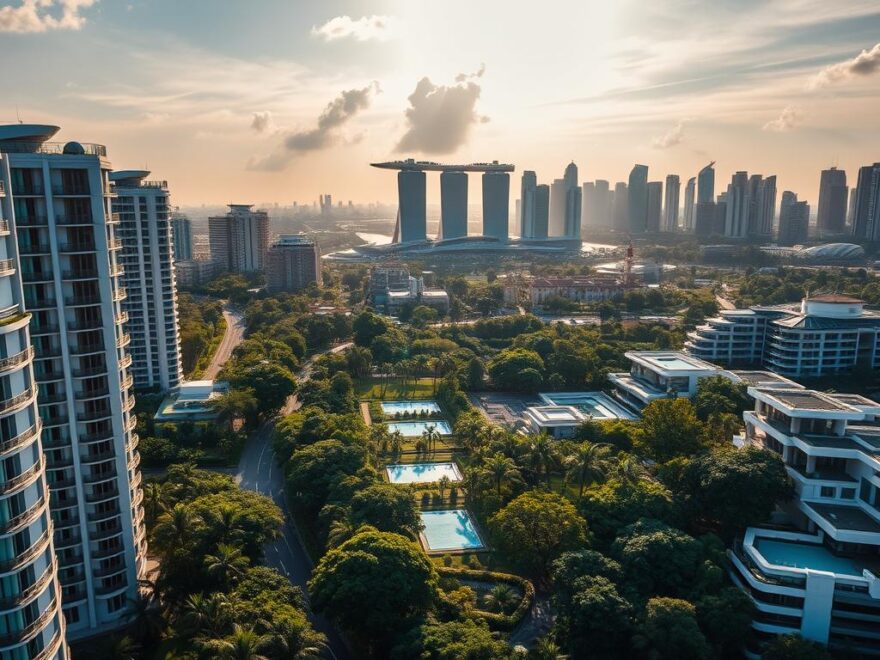
The luxury property market in Singapore is witnessing substantial growth, fueled by robust demand and governmental backing for housing initiatives.
Forecasts suggest the market’s value will soar to S$2.75 trillion by 2024. The residential segment is expected to lead the industry.
High-end properties are attracting investors, positioning it as a prime opportunity for investing in Singapore’s real estate.
The Current Landscape of Singapore Real Estate
In 2025, Singapore’s real estate market is a complex tapestry of economic indicators and government policies. It has demonstrated resilience and growth, fueled by GDP expansion, interest rate fluctuations, and regulatory frameworks.
Key Trends Impacting the Market
Several pivotal trends are shaping the Singapore property market. The demand for residential properties is on the rise, with a preference for locations near public transport and amenities. The rental sector is also expanding, driven by both local and international renters.
The trend towards sustainable and intelligent living is gaining momentum. Developers are integrating green technologies and smart home functionalities into their projects. This appeals to buyers seeking modern, eco-conscious living environments.
Economic Factors Driving Growth
Economic factors are pivotal in the expansion of Singapore’s real estate market. The nation’s GDP growth directly influences property demand, as a robust economy enhances consumer confidence and purchasing capacity.
Interest rates also play a significant role. Low interest rates facilitate more affordable borrowing, prompting buyers to invest in property. Government policies, including cooling measures to manage market dynamics, impact property prices and demand.
For those contemplating property acquisition in Singapore, grasping these economic factors and trends is crucial. Engaging with a reputable real estate agency in Singapore can offer invaluable insights and support throughout the acquisition journey.
Popular Neighborhoods for Investment
As we approach 2025, grasping the nuances of Singapore’s dynamic neighborhoods is crucial for savvy real estate investments. The property market here is rich and varied, with different locales presenting unique prospects for investors.
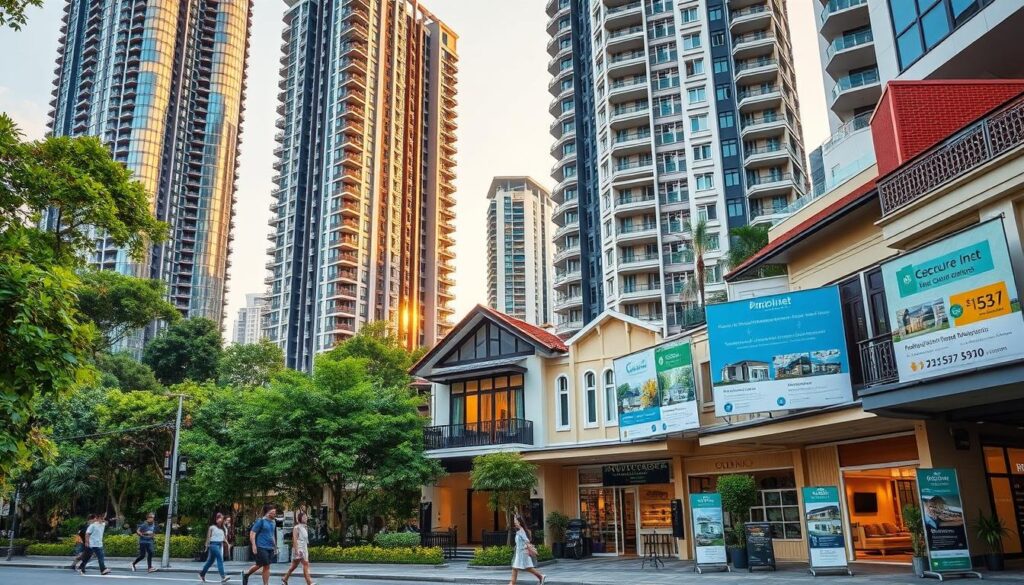
Emerging Areas Worth Considering
Woodlands and Jurong are emerging as hotspots for investors. These regions boast a spectrum of properties, from budget-friendly HDB flats to high-end condominiums. This diversity caters to a wide array of investment strategies.
Woodlands, with its ongoing development projects, offers promising long-term growth opportunities. Jurong, distinguished by its industrial estates, is rapidly becoming a business hub. This makes it a prime spot for property investment.
Established Districts with High Demand
Prime districts like Orchard Road remain highly sought after. Their prime location and amenities draw both locals and international buyers. These areas are ideal for those seeking to find a home in Singapore.
Orchard Road, renowned for its shopping and entertainment, consistently attracts tenants and buyers. Its high rental yields and potential for capital growth make it an attractive investment.
Collaborating with top real estate agents in Singapore can offer invaluable insights. They can guide investors through these neighborhoods, ensuring well-informed decisions.
The Role of Foreign Investments
Foreign investments have emerged as a pivotal force in Singapore’s real estate sector, fueling demand and shaping property prices. The influx of foreign capital has been instrumental in the market’s expansion, presenting both opportunities and challenges for investors and policymakers.
How Foreign Buyers Influence Prices
Foreign buyers significantly impact Singapore’s property market dynamics. Their purchasing activities can escalate property prices, notably in prime and luxury segments. This heightened demand propels property values upward, rendering real estate in Singapore highly appealing for investors seeking robust returns.
The influence of foreign buyers transcends mere price hikes; it also shapes the types of properties developed. There’s a rising trend towards luxury condominiums and high-end developments, tailored to international buyers’ preferences. This trend is transforming the urban landscape, enriching Singapore’s real estate diversity.
Government Regulations on Foreign Ownership
The Singaporean government has introduced regulations to manage foreign ownership, ensuring market stability. These measures include additional buyer’s stamp duty (ABSD) for foreign buyers, aimed at cooling the market and preventing overheating.
The government remains vigilant, adjusting policies as needed to balance foreign investment with local affordability. Grasping these regulations is essential for anyone contemplating real estate investment in Singapore, as they can profoundly affect investment returns.
For investors, understanding these regulations is crucial for making informed decisions. Collaborating with seasoned real estate professionals can facilitate comprehension of policy implications on foreign ownership. It also aids in identifying opportunities that align with investment objectives.
Property Types on the Rise
The real estate scene in Singapore is undergoing significant changes, with certain property types gaining prominence. This shift is influenced by the evolving interests of investors and the preferences of consumers. The demand for these properties varies, reflecting broader market trends.
Condominiums vs. HDB Flats
In Singapore, condominiums and HDB flats are the most sought-after property types. HDB flats continue to be a favorite among many locals, offering a sense of community and affordability. On the other hand, condominiums are gaining traction among investors. They promise rental income and potential for capital growth.
Condominiums boast a variety of amenities and are often situated in prime locations. This makes them appealing to both local and international buyers. In contrast, HDB flats, while more affordable, face challenges in resale value. This is due to factors like location and the age of the estate.

Luxury Real Estate Trends
Luxury real estate in Singapore remains a magnet for high-net-worth individuals. Both locals and foreigners are drawn to these properties for their exclusivity, security, and premium amenities. This segment continues to grow, driven by a desire for high-end living.
Recent trends in luxury real estate highlight a preference for smart homes with cutting-edge technology and sustainable features. Properties with easy access to amenities and scenic views are also highly coveted. These factors contribute to the allure of luxury homes in Singapore.
The Impact of Technology on Real Estate
The real estate sector in Singapore is witnessing a profound transformation, driven by technological progress. This evolution is reshaping the marketing, sale, management, and upkeep of properties.
Smart Homes and Sustainability
Technology’s influence is most evident in the rise of smart homes. These residences are equipped with cutting-edge features like automated lighting, temperature control, and enhanced security systems. Smart homes offer unparalleled convenience and comfort while promoting energy efficiency and sustainability.
In Singapore’s real estate market, sustainability is gaining prominence. Developers are integrating green technologies and eco-friendly materials into their projects. This approach not only minimizes environmental harm but also boosts the appeal of properties to eco-conscious consumers.
Virtual Tours and Real Estate Platforms
Virtual tours have become indispensable in the real estate sector, enabling potential buyers to explore properties remotely. This innovation is crucial in Singapore, where international buyers are common. Virtual tours offer a detailed, realistic view of properties, aiding buyers in making well-informed decisions without physical visits.
Real estate platforms are also undergoing significant changes to cater to tech-savvy clients. These platforms offer a wide array of services, from property listings and virtual tours to market analysis and transaction facilitation. They streamline the process of connecting buyers and sellers, making transactions more efficient.
The role of technology in Singapore’s real estate market is set to expand further, with new innovations on the horizon. As technology evolves, it will likely introduce more significant changes to property acquisition, sale, and management practices.
Financing Your Singapore Real Estate Purchase
For those contemplating real estate in Singapore, grasping the financing landscape is paramount. The journey involves exploring diverse mortgage options and comprehending down payment stipulations.
Available Mortgage Options
In Singapore, a plethora of mortgage choices awaits buyers. Options include fixed-rate, floating-rate, and hybrid mortgages, blending both. Buyers can select from a variety of financial institutions, each presenting unique interest rates and repayment schedules.

Comparing these alternatives is crucial to align with one’s financial profile. Fixed-rate mortgages ensure consistent monthly outlays, whereas floating-rate mortgages offer adaptability.
Understanding the Down Payment Requirements
The down payment is a critical component in financing a real estate acquisition in Singapore. The government has established regulations, like the Total Debt Servicing Ratio (TDSR), to prevent excessive borrowing.
First-time HDB flat buyers, being Singapore citizens, face lower down payment demands compared to private property acquisitions. Yet, for private properties, the down payment requirement is notably higher, typically 25% for locals and 30% for non-residents.
It is imperative to plan meticulously for these down payment obligations to avert financial hardship. Prospective buyers must also account for additional costs, such as stamp duties, legal fees, and other expenses inherent in the transaction.
By meticulously assessing mortgage options and down payment stipulations, buyers can make well-informed decisions in financing their real estate acquisition in Singapore.
Legal Considerations for Buyers
Grasping the intricacies of property laws in Singapore is imperative for buyers to sidestep legal entanglements. The real estate transaction landscape in Singapore is intricate, encompassing a multitude of regulations and statutes.
Navigating Property Laws in Singapore
The legal structure for property transactions in Singapore is robust. Key legislation includes the Conveyancing and Law of Property Act, the Land Titles Act, and the Residential Property Act. Buyers must comprehend these laws to ensure adherence and circumvent legal complications. For example, the Residential Property Act stipulates that certain properties can only be owned by Singapore citizens or entities.
It is crucial for buyers to be cognizant of the various property ownership structures, such as freehold and leasehold. Freehold properties are owned outright, whereas leasehold properties have a limited tenure, typically 99 years. Grasping the implications of each is essential for making an informed purchase decision.
Buyers must also be aware of the Stamp Duty and other expenses linked to property acquisition. The Additional Buyer’s Stamp Duty (ABSD) is a significant factor, notably for foreign buyers or entities. ABSD rates fluctuate based on the buyer’s profile and the property’s type.
Common Legal Pitfalls to Avoid
Buyers in Singapore’s real estate market frequently encounter legal pitfalls that can be both costly and time-consuming to rectify. A common issue is the failure to conduct comprehensive due diligence on the property, including verification of any outstanding charges or encumbrances. It is also critical to confirm that the property’s title is clear and that there are no disputes over ownership.
Another potential pitfall is not fully comprehending the terms of the sale and purchase agreement. Buyers should meticulously review the agreement to ensure they grasp their obligations and the seller’s warranties. Engaging a qualified lawyer to review the agreement and offer insights on the legal ramifications is advisable.
Buyers should also be vigilant against unscrupulous property agents or developers who may engage in unethical practices. Verifying the credentials of the agent or developer and being informed about the regulatory bodies overseeing them can help mitigate this risk.
Resources for First-Time Buyers
The Singapore real estate market is rich with resources for first-time buyers. These include expert real estate agents and advanced online property search tools. These tools aim to simplify the property buying process, making it more accessible to newcomers.
Real Estate Agents and Their Importance
Real estate agents are pivotal in guiding first-time buyers through the complexities of the Singapore property market. Their expertise aids in navigating the market, identifying suitable properties, and negotiating prices. When choosing a real estate agent, first-time buyers should seek professionals well-versed in the local market and with a history of successful transactions.
Collaborating with a reputable real estate agent in Singapore offers first-time buyers invaluable insights into market trends. Agents can also facilitate viewings, handle paperwork, and advise on financing options. This makes the buying process significantly smoother.
Online Tools for Property Searches
First-time buyers can also benefit from online property tools in addition to real estate agents. These platforms offer comprehensive listings, detailed property information, and advanced search filters. This enables buyers to efficiently find properties that meet their criteria.
Online property portals in Singapore provide a wealth of information. This includes property prices, location details, and amenities. By using these tools, first-time buyers can conduct thorough research, compare properties, and make informed decisions about their purchase.
Future Projections for the Singapore Market
The Singapore property market is set to experience significant growth, influenced by economic and demographic factors. As the market evolves, grasping future projections is essential for both investors and homebuyers.
Expected Property Value Increases
Experts foresee a consistent rise in property values, driven by government policies, economic trends, and demographic shifts. The demand for housing, notably in prime areas, will remain robust, fueling the upward trajectory in property values.
Multiple elements will shape the rate of property value hikes. These include economic growth pace, interest rates, and regulatory policies. It is imperative for investors to remain abreast of these factors to make strategic decisions.
Long-Term Economic Outlook
Singapore’s economic outlook for the long term remains optimistic, cemented as a pivotal trade, finance, and technology hub in Asia. This status is anticipated to draw sustained foreign investment, propel economic expansion, and underpin the real estate sector.
The government’s dedication to infrastructure enhancement and its proactive stance on economic hurdles will enhance the economy’s stability. This, in turn, is expected to positively impact the real estate market.
In summary, the future of Singapore’s real estate market appears bright, with anticipated property value increases and a favorable long-term economic outlook. Investors and homebuyers should factor these projections into their decision-making processes for the Singapore property market.
Conclusion: Why Now is the Time to Invest
Investing in Singapore’s real estate market offers a compelling opportunity for investors. It is driven by the potential for long-term capital appreciation and rental income. As the market continues to evolve, now is an attractive time to invest in Singapore property.
Benefits of Early Investment
Early investment in Singapore Real Estate can yield significant benefits. It includes increased property value over time. By entering the market now, investors can capitalize on the current market opportunities Singapore has to offer.
Recap of Market Opportunities in 2025
The Singapore Real Estate market in 2025 is characterized by emerging neighborhoods and established districts with high demand. Investors can explore various property types, from condominiums to luxury real estate, to find the best fit for their investment goals. With the right strategy, investing in Singapore property can be a lucrative venture.