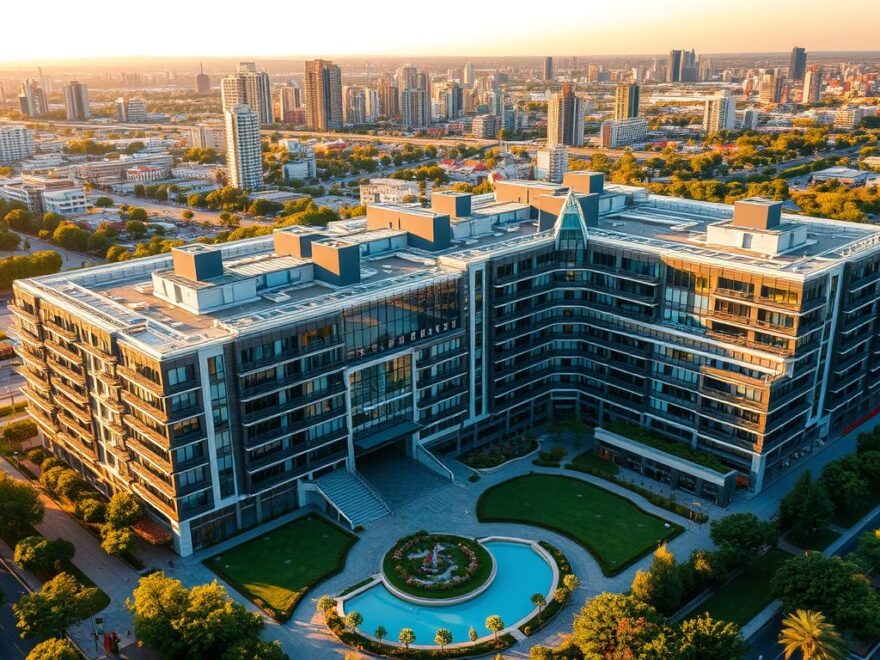
As we gaze into the horizon of 2025, the Singapore property market is on the cusp of a significant expansion. This development heralds a plethora of lucrative prospects for astute investors.
The current statistics reveal an uptick in the demand for both residential and commercial properties. This surge is attributed to Singapore’s thriving economy and the implementation of supportive government policies.
Investors can leverage this trend by delving into emerging locales and sectors. These areas promise substantial returns, marking an opportune moment to unearth valuable property investment opportunities.
Overview of Property Investment Trends in Singapore
The Singapore property market is influenced by a multitude of factors, shaping investment trends. For those seeking to invest, understanding these dynamics is paramount. It’s essential for tapping into the market’s potential.
Current Market Landscape
The Singapore market is a blend of residential, commercial, and industrial properties. Recent data indicates a price surge in private residential markets. This is driven by high demand and limited supply.
The commercial sector is also expanding, with a focus on retail and office spaces in prime locations. Industrial properties, notably in logistics and warehousing, are in high demand. This is due to the rise of e-commerce.
Factors Influencing Property Investment
Several elements are shaping property investment in Singapore. Government policies, economic conditions, and demographic shifts are key. The government’s cooling measures have impacted the residential market. Economic factors, such as interest rates and GDP growth, influence investor sentiment.
Demographic changes, including an aging population and foreign talent influx, are also pivotal. These factors will continue to influence the market in the future.
Future Growth Predictions
The future for property investment in Singapore looks promising. The country’s economic stability and growth potential are driving this optimism. The government’s plans for infrastructure and urban renewal will open new avenues for investors.
Investors should monitor emerging trends and market dynamics closely. This will enable them to seize the real estate investment opportunities in Singapore.
Key Property Investment Opportunities in 2025
In 2025, Singapore’s property market will offer a wide range of investment options. From residential to commercial and industrial properties, the city-state’s strong economy and strategic location make it highly appealing. Its favorable business environment further solidifies its status as a prime destination for property investors.
Residential Properties
Residential properties are a favored choice for investors in Singapore. The demand for housing is on the rise, fueled by a growing population and an expanding middle class. New residential projects, situated near public transportation and amenities, are expected to draw considerable interest.
Investors have various residential investment opportunities to consider. These include private condominiums, executive condominiums, and HDB flats. The potential for rental income and capital appreciation makes these properties highly attractive.
Commercial Real Estate
Commercial real estate investments are gaining traction in Singapore. The economy’s growth and increasing demand for office and retail spaces are driving this trend. Areas with high foot traffic, such as the Central Business District and other commercial hubs, offer lucrative opportunities for investors.
The rise of e-commerce has also fueled demand for logistics and warehouse spaces. This makes commercial real estate a diverse and potentially high-yielding investment sector.
Industrial Properties
Industrial properties, including warehouses, factories, and industrial estates, are gaining investor interest. The growth of e-commerce and the need for efficient logistics and supply chain management have driven demand for these spaces.
Investors should consider properties in areas with good connectivity and infrastructure. The western and northwestern parts of Singapore, with their industrial estates, are prime locations for such investments.
Financial Considerations for Investors
Investors seeking to profit from Singapore’s property market must grasp the financial nuances. The city-state’s property market is renowned for its resilience, presenting a plethora of investment opportunities. Yet, to capitalize on these, one must decipher the intricate financial aspects involved.
Understanding Capital Gains Tax
Capital Gains Tax is a pivotal consideration in property investment. Singapore does not impose a Capital Gains Tax on property sales. Yet, profits from property sales are taxable if the properties are bought and sold for business purposes. Grasping the tax implications is crucial for investors to make strategic decisions.
Seeking counsel from tax experts is imperative to gauge the tax repercussions of property transactions. This step aids in crafting investment strategies and ensuring adherence to tax laws.

Financing Options for Property Investment
Securing financing is a critical phase in property investment. Investors have access to various financing avenues, including bank loans and mortgages. It is essential to comprehend the terms and conditions of these options to make informed choices.
Comparing interest rates and repayment terms across different lenders is crucial. Investors must also consider the loan-to-value ratio and other eligibility criteria to secure the necessary funding.
By meticulously evaluating financing options and understanding Capital Gains Tax implications, investors can make more informed decisions in the Singapore property market.
Emerging Neighborhoods for Investment
Investors are increasingly focusing on emerging neighborhoods in Singapore, drawn by their high-growth potential. These areas are undergoing significant transformations, fueled by infrastructure advancements and shifting demographics.
Districts with High Growth Potential
Several districts in Singapore are emerging as prime locations for property investment. These include regions with new MRT stations, industrial developments, and urban planning initiatives. For example, the Jurong Lake District’s development is expected to elevate property values in the vicinity, making it a
The Punggol waterfront growth corridor is also gaining attention. It features new residential and commercial projects, attracting investors with its potential for capital growth and rental income.
Infrastructure Developments
Infrastructure is pivotal in driving property investment opportunities. The Singapore government’s ongoing investment in transportation, such as the MRT system expansion, enhances connectivity and accessibility. This, in turn, increases the appeal of emerging neighborhoods.
The development of amenities like shopping malls, schools, and healthcare facilities also boosts these areas’ appeal. For instance, the upcoming Cross Island MRT line is set to transform the northern region, making it an attractive investment opportunity.
As these neighborhoods continue to evolve, they offer investors chances to leverage growth potential. By grasping the drivers of this growth, investors can make strategic decisions regarding their real estate investments.
The Role of Technology in Property Investment
The landscape of property investment in Singapore is undergoing a transformation, driven by technological advancements in PropTech and smart homes. As we approach 2025, grasping the implications of these technologies is essential for investors aiming to leverage property investment opportunities.
PropTech Innovations
PropTech, or Property Technology, is revolutionizing the real estate sector by enhancing transaction efficiency, transparency, and accessibility. It encompasses digital platforms for property transactions, AI-driven valuation tools, and blockchain for verifying property ownership. These innovations streamline processes and broaden access to high-yield investment properties for a wider investor base.
For example, digital marketplaces simplify the process of finding and investing in commercial real estate. PropTech also enriches the investor experience by offering real-time data analytics and market insights. This enables investors to make more informed decisions.
Smart Home Trends
Smart home technology is significantly shaping property investment in Singapore. Smart homes, equipped with IoT devices and automated systems, are gaining popularity. This trend is fueled by the demand for convenience, energy efficiency, and enhanced security.
Investing in smart home technology can significantly boost the value of both commercial and residential properties. Properties with smart features are more appealing to tenants and buyers. They also command higher rental yields and sale prices.
Regulatory Framework for Property Investors
Investors aiming to enter the Singapore property market must first grasp the regulatory landscape. The market is subject to a multitude of rules and regulations. These can profoundly influence investment choices.

Recent Policy Changes
The Singapore government frequently revises its policies to manage the property market. These updates aim to keep the market stable and accessible to all. Investors must keep abreast of these changes to successfully navigate the market.
For example, adjustments to the Total Debt Servicing Ratio (TDSR) and Loan-to-Value (LTV) limits have been made. These changes are designed to regulate borrowing and prevent market overheating. It is essential for investors to understand these policy shifts to make well-informed investment decisions.
Understanding Foreign Ownership Rules
Foreign ownership rules in Singapore are intricate, with varying regulations for different property types. For instance, foreigners face restrictions on purchasing certain residential properties, like HDB flats, unless they meet specific criteria.
Investors should be aware of the Additional Buyer’s Stamp Duty (ABSD) and other taxes levied on foreign buyers. These regulations can have a significant impact on investment profitability. Seeking professional advice is often necessary to comply with these rules.
By keeping up with regulatory changes and foreign ownership rules, investors can better navigate the Singapore property market. This knowledge is crucial for capitalizing on residential investment opportunities.
Benefits of Investing in Real Estate
Real estate investment is a cornerstone of wealth creation for many investors globally. In Singapore, the property market has consistently offered lucrative property investments. This makes it an attractive destination for both local and foreign investors. The benefits of investing in real estate are multifaceted, ranging from long-term wealth creation to various tax benefits and incentives.
Long-term Wealth Creation
One of the primary benefits of investing in real estate is the potential for long-term wealth creation. As property values appreciate over time, investors can build significant equity in their properties. This appreciation is driven by factors such as location, infrastructure development, and demand for housing or commercial spaces.
In Singapore, the limited land supply and growing demand for properties have historically led to capital appreciation. This makes it a profitable property venture. Rental income from properties provides a steady stream of passive income, further enhancing the overall return on investment. Investors can leverage this income to service mortgage payments or reinvest in additional properties, compounding their wealth over time.
Tax Benefits and Incentives
In addition to long-term wealth creation, real estate investments in Singapore come with various tax benefits and incentives. For instance, the Singapore government offers tax incentives for certain types of property investments, such as those in industrial or commercial properties. These incentives can significantly reduce the tax burden on investors, enhancing the overall profitability of their property investment opportunities.
Investors can also benefit from tax deductions on mortgage interest, property taxes, and other expenses related to maintaining their properties. These deductions can help reduce taxable income, resulting in lower tax liabilities. Understanding and leveraging these tax benefits is crucial for maximizing the returns on lucrative property investments.
Risks Associated with Property Investment
Understanding the risks is crucial for successful property investment in Singapore. The property market offers lucrative opportunities, yet investors must be aware of the potential challenges. These challenges are inherent to the investment landscape.
Market Volatility
Market volatility is a significant risk in property investment. Fluctuations in the market can affect property values, rental yields, and overall returns on investment. Investors must stay informed about market trends and be prepared for potential downturns.
Factors contributing to market volatility include economic conditions, government policies, and global events. For instance, changes in interest rates or new regulations on foreign ownership can impact the property market.
Management Challenges
Effective property management is crucial for mitigating risks and ensuring the profitability of investments. Management challenges include finding reliable tenants, maintaining property condition, and handling legal responsibilities.
Investors in high-yield investment properties, such as commercial real estate investments, must be vigilant about management. This includes ensuring compliance with regulations and maintaining a high standard of property maintenance.
By understanding these risks and taking proactive measures, investors can better navigate the complexities of the Singapore property market. They can make informed decisions about their real estate investment options.
Engaging Property Investment Consultants
Engaging a property investment consultant can be transformative for those aiming to leverage Singapore’s residential investment opportunities. Their expertise allows investors to better navigate the intricate market landscape.
Benefits of Professional Guidance
Property investment consultants provide critical insights into the Singapore property market. They help investors pinpoint lucrative investment prospects. Their guidance empowers investors to make informed decisions, reducing the risks associated with property investments.
These consultants are adept in local market trends and regulatory requirements. They ensure investors adhere to all necessary laws and regulations when investing in properties.

Selecting the Right Consultant
Choosing the right property investment consultant is paramount for achieving successful investment outcomes. Investors should seek consultants with a proven track record in the Singapore market, focusing on residential investment opportunities.
It is crucial to evaluate the consultant’s understanding of current market trends, their network, and their ability to offer personalized advice that matches the investor’s objectives.
By selecting the appropriate consultant, investors can gain a competitive advantage in the Singapore property market. This unlocks new avenues for growth and wealth creation.
Case Studies of Successful Property Investments
Successful property investments in Singapore stem from meticulous planning and strategic decision-making. Investors who excel in the market share a commonality: a profound grasp of market trends and an acute ability to spot potential. This combination is pivotal in navigating the complexities of the real estate landscape.
Residential Success Stories
Residential property investments in Singapore have been highly rewarding for many. Properties in areas experiencing significant redevelopment, such as the expansion of the Mass Rapid Transit (MRT) system, have seen substantial value appreciation. A prime example is the surge in property prices near upcoming MRT stations along the Thomson-East Coast Line.
Investing in condominiums proximal to popular amenities, such as shopping malls and entertainment districts, is another successful strategy. These properties command high rental demand, ensuring a consistent income stream for investors.
Commercial Success Stories
Commercial property investments in Singapore have also yielded substantial returns. Office spaces within the Central Business District (CBD) and areas slated for future development have been notably profitable. The emergence of new business parks and the expansion of existing ones have opened up opportunities for investors to tap into the demand for commercial space.
Retail properties, notably those situated in bustling shopping districts, have also been successful. The rise in tourism and increased consumer spending have fueled the demand for retail space, rendering investments in this sector appealing.
These case studies underscore the significance of comprehending market dynamics and pinpointing areas with high growth potential. By adopting this approach, investors can make well-informed decisions, thus maximizing their returns on investment.
Platforms for Finding Property Investment Opportunities
The advent of digital real estate platforms has revolutionized the landscape for investors in Singapore. These platforms now offer a plethora of property investment options. They have significantly altered the manner in which investors search, analyze, and invest in properties.
Online Marketplaces
Online marketplaces have emerged as a primary hub for property investors. They present a vast array of listings, spanning residential, commercial, and industrial properties. These platforms deliver comprehensive property details, encompassing pricing, location, and amenities. This enables investors to make well-informed decisions.
The advantages of utilizing online marketplaces include their convenience, accessibility, and the capacity to compare multiple properties. Yet, investors must remain vigilant against potential pitfalls, such as outdated listings and inaccuracies.
Real Estate Agencies
Real estate agencies remain indispensable in the realm of property investment. They offer expert counsel, market insights, and access to exclusive listings. Agencies possess a profound understanding of local market trends. This enables them to steer investors towards properties with high investment potential.
When choosing a real estate agency, investors should evaluate factors such as the agency’s reputation, experience, and network. A reputable agency can offer invaluable insights into commercial real estate investments and other opportunities.
In summary, both online marketplaces and real estate agencies are crucial platforms for uncovering property investment opportunities in Singapore. By harnessing these platforms, investors can pinpoint lucrative investments and realize their financial objectives.
Conclusion: Taking Action on Your Investment Journey
The Singapore property market is rich with opportunities for growth. To seize these chances, investors must first articulate their goals and devise a strategy for property investment.
Defining Investment Objectives
Establishing clear objectives is paramount for success in property investment. This entails deciding whether your aim is long-term wealth creation through residential investments or short-term profits from commercial real estate.
Next Steps for Potential Investors
After setting your objectives, the next move is to investigate the property investment prospects available. This can involve working with property consultants, exploring online marketplaces, or directly contacting real estate agencies to identify suitable investment opportunities.
By adopting a proactive and well-informed approach to property investment, you can successfully navigate the complexities of the Singapore property market. This will help you achieve your investment objectives.